
Cleanouts
Clearing a Farmstead Without Loading the Wrong Thing
A machine shed holds forty years of decisions nobody wrote down. Half of what is in it cannot go in a container.
Why this job is different
A house clearance is mostly volume. A farmstead clearance is mostly sorting, and the sorting is where the money and the risk both are.
An operating farm accumulates things no household does: bulk fuel, motor oil, hydraulic fluid, pesticide and herbicide containers, batteries of every size, tires, fertilizer, welding gas, irrigation pipe, fencing wire, scrap iron, and a machine shed's worth of parts that were kept because they might be useful. Most of it was kept by someone who knew exactly what it was. By the time it is being cleared, that person is often not available to ask.
So the order of operations matters more here than on any other job we do.
⚠️ Chemicals come out first
Before a single box moves, walk every building and every shelf.
What to expect in a Hale County outbuilding:
- Herbicide and pesticide containers, often decades old, sometimes with labels gone. An unlabelled jug is the worst case — it has to be treated as unknown.
- Bulk fuel in barrels or a farm tank, plus cans of gasoline and diesel.
- Motor oil, hydraulic fluid and grease, used and unused.
- Batteries — tractor, truck, and increasingly lithium packs in tools.
- Welding and propane cylinders, including "empty" ones.
- Old fertilizer.
- Paint and solvent from four decades of maintaining buildings.
The good news locally: the landfill recycles all oil and filters brought to it, and the Recycling Center at 1018 E. Fourth Street takes used motor oil and antifreeze. That covers a real share of what you will find. For the genuinely hazardous material — unlabelled agricultural chemicals especially — ask the City where to take it rather than guessing.
Do this first. Once boxes are stacked in front of a shelf, the shelf gets forgotten, and a fuel can that ends up in a container is a serious problem for everybody downstream.
⚠️ The tire problem
Every farmstead has tires. Usually a lot of them.
Tires cannot go in the container, and the local route has a cap: the landfill limits drop-offs to ten per person per day.
So thirty tires behind the shed is not one trip. It is three days, or a conversation with the City about a better arrangement, and either way it needs planning before the container arrives rather than after you have already loaded around them.
Implement tires are worse — large, heavy, awkward and often full of water or sand. Deal with them separately and early.
Scrap metal is worth real money
This is the part that can genuinely pay for the container.
A farmstead is full of metal, and metal has positive value rather than a disposal cost:
- Implement iron and old machinery
- Irrigation pipe — aluminum and steel both, though PVC is not scrap
- Fencing wire and posts — and the wire is worth pulling out anyway, because it fouls processing equipment
- Sheet metal off buildings, panels and roofing
- Tanks, troughs and barrels (drained and clean)
- Radiators, batteries and wiring — handled separately
Two benefits at once: you get paid for it, and every ton of metal you pull out is a ton not counting against your container's weight allowance. The landfill also recycles all metal brought to it.
Pull the metal before you load anything. It is the single biggest cost lever on a job like this.
Asbestos in older outbuildings
Worth taking seriously, because farm buildings out here are frequently older than the house.
In anything predating 1980, look before you tear out:
- Corrugated cement sheet on sheds and barns
- Pipe lagging, particularly around old boilers and well houses
- Floor tile and the adhesive under it
- Furnace and stove insulation
- Some older siding and roofing products
Asbestos never goes in a container. It needs a licensed abatement contractor, and a demolition permit will often carry conditions about it. Test first; a test is cheap compared with what happens if you find out afterwards.
What a container is actually for
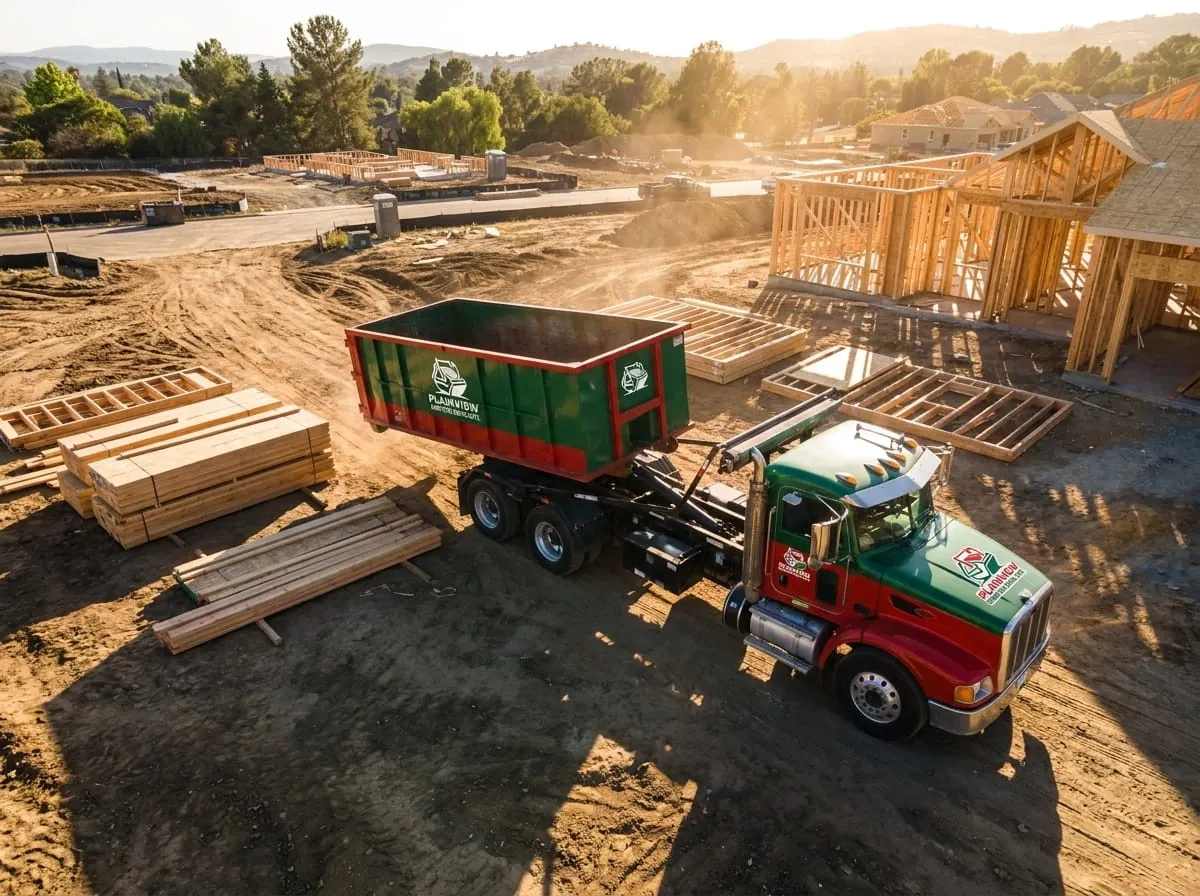
After the chemicals, tires, metal and hazardous material are out, what remains is genuinely container work and there is usually a lot of it:
- Timber, fencing, pallets and crating
- Treated posts and landscape ties
- Insulation, sheeting and building debris
- Furniture, household contents and bedding from a farmhouse
- Rubber belting, hose and non-metal implement parts
- Plastic drums (drained and rinsed), PVC pipe, tarps and twine
- General clutter, four decades of it
⚠️ And remember: the Plainview landfill's free-disposal exemption does not apply out here. It runs on a City of Plainview water bill, and a farmstead address does not have one. Whether you haul it or we do, it is a paid load at the gate — the difference is that when we do it, the gate fee is already in the flat rate you were quoted.
Sizing a farmstead job
- One machine shed cleared: 30 yard
- Machine shed plus equipment yard: 30 yard with swaps, plus a separate small container for heavy and metal material
- Farmhouse contents: 30 yard — bulky and light, volume binds first
- Whole farmstead, buildings and contents: phased 30 yards, staged over weeks
- Shelter belt or fence line cleared: 20 yard — brush, posts, wire and footings
- Building demolition: 30 yard with swaps, and settle the asbestos question first
- Anything with concrete, soil or caliche: 10 yard, part filled
These jobs almost never run to a tidy timetable, so we book them with longer rental windows and plan the swaps around your progress rather than a schedule set in advance.
A clearing order that works
- Walk every building and write down what is in it before anything moves
- ⚠️ Chemicals, fuel and unlabelled containers out first
- ⚠️ Count the tires and plan for ten per person per day
- Pull the scrap metal — it pays, and it takes weight out
- Take oil, filters and antifreeze to the landfill or the Recycling Center
- Settle the asbestos question on anything pre-1980 before demolition
- Then book the container, now that you know what is actually going in it
- Load heavy and flat first, light material buried — the wind out here is relentless
- Call for the swap before it is full, not after
- Walk the ground afterwards for wire, nails and glass
Need a container in Plainview?
Call and describe the job. Three minutes on the phone gets you a size recommendation, a flat rate and a delivery window — and we will tell you if a smaller, cheaper container is the right answer.
Call (806) 429-4181