
Practical
The Wind Will Empty Your Dumpster If You Let It
Everywhere else this is a footnote. Here it is the difference between a clean job and picking insulation out of a neighbour's fence.
Wind is not an event here
In most markets, wind is something you think about on a bad day. On the southern High Plains it is the baseline condition.
There is nothing to slow it down. The ground is flat in every direction, the tree cover is whatever somebody planted and watered, and spring routinely delivers days on end of steady wind with gusts well beyond it. Any guide that treats securing a load as an afterthought was not written for this country.
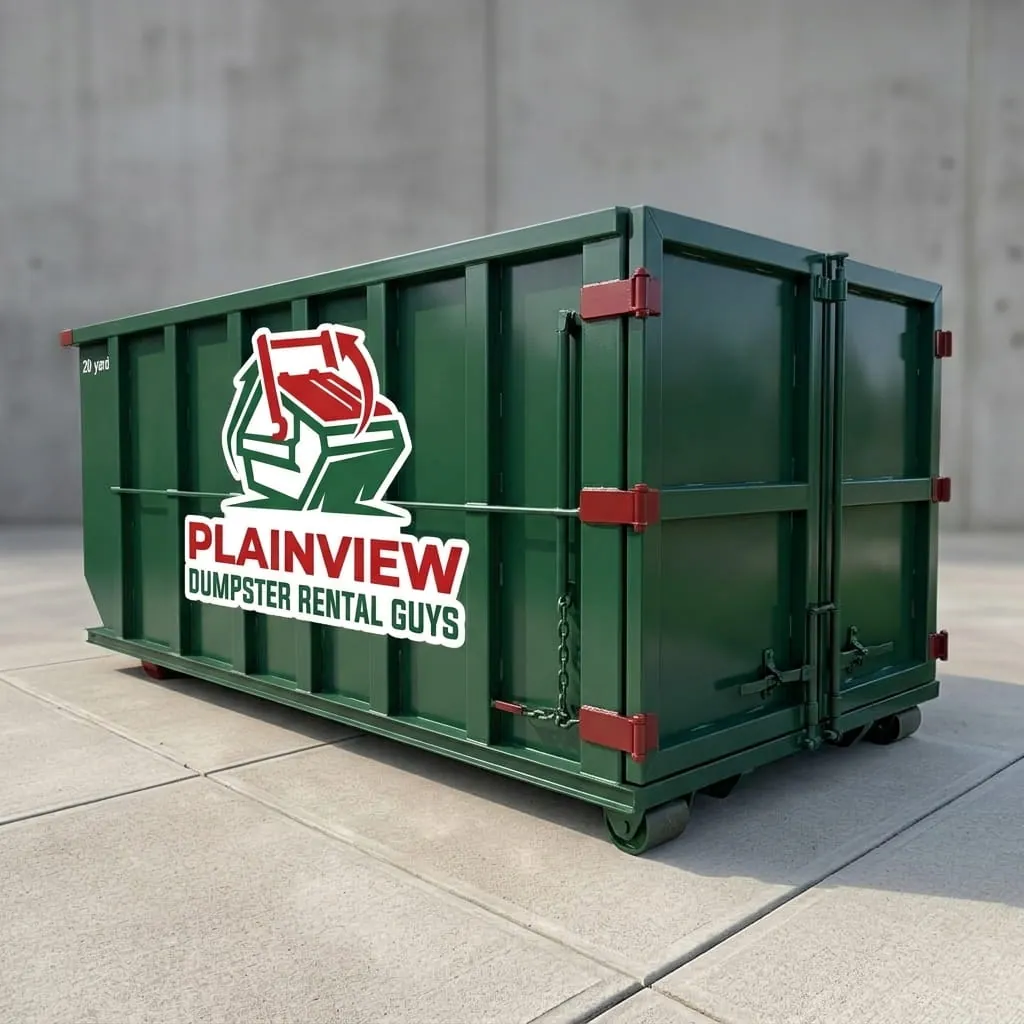
The practical consequence is simple: an open container in Plainview is a large, wide, permanently ventilated box, and anything in it that can fly, will.
What actually blows out
In rough order of how often we see it:
- Insulation. The worst offender by a distance. Fibreglass batts and loose fill travel astonishing distances and are essentially impossible to retrieve. Bag it before it goes in.
- Housewrap, underlayment and sheet plastic. Acts like a sail. Weight it or bag it.
- Cardboard and packaging. Flatten it and put it underneath something.
- Shingle granules and tar paper offcuts. Light, endless, and they end up in pools and gutters.
- Foam board. Almost weightless. Break it down and bury it in the load.
- Ceiling tile. Same problem.
- Drywall dust and offcuts. The dust especially, on a dry day.
- Bagged material that was not tied. An untied bag is not a bag.
Notice what those have in common: they are the materials a remodel produces most of, and they are exactly what a homeowner throws in first because it is easy to carry.
Load order matters more than you think
Everywhere, loading order affects how much fits. Here it also decides how much stays.
- Heavy and flat first. Timber, drywall sheets, decking, cabinetry — build a solid floor across the whole container.
- Light material in the middle, never on top. Insulation, foam, wrap and packaging want to be buried, not crowning the load.
- Cap it with something heavy. A sheet of ply, a pallet, a piece of countertop laid flat over the light material makes an enormous difference.
- Bag the fines. Anything you could scoop up in handfuls goes in a tied bag before it goes in the container.
- Never load above the rail. Beyond being unhaulable, a proud load catches wind like a sail.
- Do not leave it half loaded overnight with light material exposed. That is when it goes.
The counter-intuitive one is that a fuller container is often a safer one, because there is less room for material to lift and tumble.
Covering a container
Worth asking about at booking rather than improvising on site.
- Ask us about a cover or tarp when the job is insulation-heavy, and we will tell you what we can do.
- A tarp must be secured to the container, not draped. A loose tarp becomes its own problem.
- Weight the edges if you are tarping it yourself — timber offcuts along the rail work fine.
- Cover it before you knock off, not the next morning.
- Rain matters too. It is not frequent here, but a container that has taken a downpour is carrying water weight you pay for, especially with drywall or insulation in it.
⚠️ Blowing dust and open loads
A local condition worth planning around rather than being surprised by.
Dry, windy spring days lift dust off worked fields across this whole region, and a serious one reduces visibility sharply. Two practical effects:
- It fills an open container. Fine dust settles into a load and adds weight you did not put there. On a job already near its allowance, that is not nothing.
- It affects hauling. If visibility drops badly we may hold a delivery or a pickup for a few hours. We would rather move your container safely than on schedule, and we will call you rather than leave you guessing.
If a dusty stretch is forecast and your load is light material, that is a good day to cap it and cover it.
Where you put the container
Placement can reduce the problem before loading even starts.
- Use the building as a windbreak where the access allows it. The lee side of a house or a shop genuinely helps.
- Avoid the open corner of a lot. A container sitting in the middle of nothing gets the full force.
- Think about where debris would go if it did blow — a neighbour's yard, a road, a field, a stock tank. Orient accordingly.
- Boards go down as standard on every delivery, and out here they do a second job: caliche and gravel drives are less forgiving of point loading than they look.
- Tell us about the drive surface. Caliche, gravel, concrete and chip seal all behave differently under a loaded container, and we would rather know first.
The legal and neighbourly side
Two things worth keeping in mind.
First, debris that leaves your container is still your debris. Once it is in somebody's yard, across a road or in a field, the problem is yours to fix, and on a windy day it can be a long way away by the time you notice.
Second, this is a town where people notice. A contractor whose sites blow trash across a neighborhood gets a reputation quickly, and so does the homeowner. Ten minutes capping a load is cheaper than either.
If material does escape, the honest move is to go and pick it up, including out of the neighbour's yard, before anyone asks.
A loading checklist
- Bag insulation, fines and anything scoopable before it goes in
- Heavy and flat on the floor, across the whole container
- Light material buried in the middle, never on top
- Cap the load with ply, a pallet or something heavy and flat
- Never load above the rail — unhaulable, and it catches wind
- Ask about a cover on insulation-heavy jobs
- Secure a tarp to the container, do not drape it
- Cover before you knock off, not in the morning
- Use the building as a windbreak where access allows
- Tell us the drive surface — caliche and gravel behave differently
- Pick up anything that escapes, including next door
Need a container in Plainview?
Call and describe the job. Three minutes on the phone gets you a size recommendation, a flat rate and a delivery window — and we will tell you if a smaller, cheaper container is the right answer.
Call (806) 429-4181